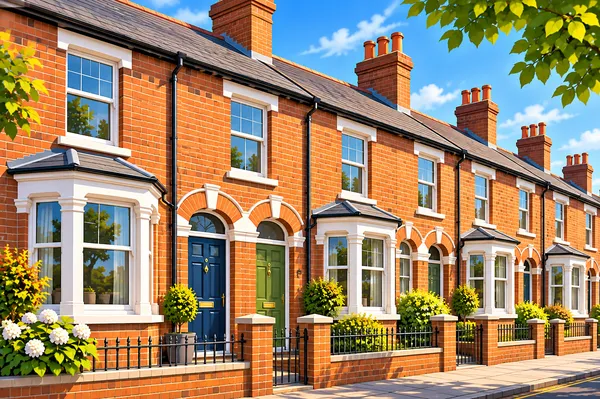
For most Victorian, Edwardian and other period homes, a RICS Level 3 Building Survey is the right choice. These houses were built with solid walls, shallow foundations, lime mortar and timber floors, and many have been altered over a century or more. A Level 3 gives you the detail you need on condition, causes of defects and sensible repair approaches.
Key points
- Choose a Level 3 for most period homes, particularly if altered, extended or in poor repair.
- A well-kept, largely original Victorian terrace may suit a Level 2, but ask the surveyor first.
- Common issues include damp, roof wear, chimney problems, movement, and dated services.
- Many problems in old houses come from unsuitable modern repairs, not the original building.
Which survey do you need for a period home?
The RICS Home Survey Standard has three levels. For period properties:
- Level 3 Building Survey - the usual recommendation. It includes a more thorough inspection and explains defects, likely causes and repair options.
- Level 2 Home Survey - can be suitable for a conventional period home, such as a typical brick Victorian or Edwardian terrace, if it is in good condition and not heavily altered.
- Level 1 Condition Report - generally too basic for older homes.
If you are not sure, speak to the surveyor. Our Level 2 vs Level 3 guide explains the trade-offs.
How were period homes built?
Understanding the construction helps you read the report. Many period homes share features such as:
- Solid brick or stone walls rather than cavity walls, relying on breathability to manage moisture.
- Lime mortar and lime plaster, which are softer and more flexible than modern cement.
- Shallow foundations, sometimes just stepped brickwork on the ground.
- Suspended timber ground floors, ventilated through air bricks.
- Slate or clay tiled roofs, often with no roofing felt underneath.
- Chimneys for every main room, many no longer in use.
- Sash windows and decorative joinery.
Georgian and earlier homes, and those in rural areas, may also use timber frame, cob or local stone.
Common defects in Victorian and period homes
Damp
Damp is one of the most common issues. In older homes it is often caused or made worse by:
- Ground levels or paths built up against the walls.
- Blocked or missing air bricks under timber floors.
- Leaking gutters and downpipes.
- Cement render, cement pointing or modern paints that trap moisture.
- Poor ventilation and condensation.
A good surveyor will look at causes rather than simply recommending chemical damp treatment. See our guide to damp in a survey report.
Roofs and chimneys
Original slate roofs can suffer from nail fatigue, where the fixings corrode and slates slip. Ridge tiles, valleys, lead flashings and chimney pointing all wear over time. Disused chimneys may need capping and ventilating. Many surveyors use binoculars from the ground, plus the roof space, to assess the roof. Our guide to common roof problems has more.
Movement and cracking
Period homes with shallow foundations can be sensitive to ground movement, especially on shrinkable clay soils near trees. Many show old, stable movement such as slightly sloping floors or distorted openings. The surveyor's job is to judge whether movement is historic or still active. See cracks in walls: which ones a surveyor worries about.
Bay windows and lintels
Bay windows are a common weak point, as they may have shallower foundations than the main house. Timber or iron lintels over windows can decay or corrode, leading to cracking above openings.
Timber decay
Suspended floors, roof timbers and joinery can be affected by wet rot, dry rot or wood-boring insects, particularly where ventilation is poor or leaks have gone unnoticed.
Services
Older homes often have a patchwork of updated and original services. You may find old wiring, lead or galvanised water pipes, or older heating systems. A surveyor will give a visual view and may recommend specialist checks. Our guide to electrics and gas in a house survey explains what a surveyor does and does not check.
Alterations
Many period homes have had walls removed, loft conversions or rear extensions added. Removing chimney breasts or internal walls without proper support can cause problems. See our guide to buying a house with an extension or loft conversion.
Why modern repairs can cause problems
A recurring theme in period home surveys is damage caused by well-meaning but unsuitable repairs. Examples include:
- Repointing soft brick with hard cement mortar, which can cause the bricks to spall.
- Covering solid walls with cement render, which traps moisture.
- Installing impervious floors or tanking that pushes damp elsewhere.
- Blocking air bricks to reduce draughts.
A surveyor experienced with older properties will spot these and recommend appropriate fixes, such as lime-based materials.
Conservation areas and listed period homes
If the home is in a conservation area, there may be restrictions on changes to windows, doors, roofs and front gardens. If it is listed, the rules are stricter and consent history becomes important. See buying a listed building: which survey do you need?.
How to get the most from your survey
- Book early, as soon as your offer is accepted, so you have time for any further investigations.
- Choose a surveyor with period property experience, ideally local, as they will know local building styles and ground conditions.
- Share what you know, such as planned works or concerns from your viewings.
- Follow up on recommendations, such as drainage, electrical or timber reports, before exchange.
- Speak to the surveyor after the report to understand priorities.
Budgeting for an older home
Expect a Level 3 on a period home to list a number of repairs. That is normal and does not mean you should not buy. Use the report to separate urgent defects (condition rating 3) from ongoing maintenance, get quotes where needed and factor the costs into your offer.
Book a survey for your period home
Book A Surveyor finds a local RICS or RPSA regulated independent surveyor, agrees a fixed price, arranges access with the estate agent and takes payment, so you get a booked survey rather than a list of quotes. See how it works, browse surveyor locations, or get a fixed-price survey booked.
Get your survey booked, not quoted
Fixed price up front. We find a local RICS or RPSA surveyor, arrange access with the agent and confirm the date.
See your priceFrequently asked questions
Is a Level 2 survey ever enough for a Victorian house?
It can be for a well-maintained Victorian terrace that has not been heavily altered, if the surveyor is comfortable with it. For most period homes, especially those altered or in poorer condition, a Level 3 is the safer choice.
Do Victorian houses have a damp proof course?
Many early Victorian houses were built without one, and others have had chemical damp-proof courses added later. Damp in solid-walled homes often has other causes, such as blocked air bricks, high ground levels or impervious renders.
Are Victorian houses prone to subsidence?
Their shallow foundations can make them more sensitive to ground movement, especially on clay soils near trees. Many show historic movement that is stable, which a surveyor will try to distinguish from ongoing movement.
Should I get the electrics checked in a period home?
Yes, it is sensible. Surveyors only inspect electrics visually, so an Electrical Installation Condition Report from a qualified electrician is worth considering, especially if the wiring looks dated.
How much does a survey on a period home cost?
A Level 3 typically costs around £600-£1,500 or more, depending on size, value and location. Large or complex period homes are often at the higher end.
Related guides
Buy-to-let surveys: what landlords should check before they buy
Buying a rental property? Which survey landlords need, what to look for so the home passes safety and lettings standards, and how it ties in with your buy-to-let mortgage.
Choosing a surveyBuying a flat: which survey and what to check
Which survey to get when buying a flat, what a surveyor can and can't inspect in a block, and the lease and building checks that matter.
Choosing a surveyBuying a house with an extension or loft conversion: survey guide
Buying a home with an extension or loft conversion? Which survey to choose, common defects, and the paperwork your conveyancer should check.