The roof problems surveyors find most often are slipped or missing slates and tiles, failing ridge and verge mortar, worn flashings around chimneys, ageing flat roofs, and issues in the loft such as condensation, decay or inadequate support. Most are routine maintenance items, but some, such as widespread nail sickness, a failed flat roof or a sagging structure, can mean a significant bill. Your survey should tell you which category your roof falls into.
Key points
- Surveyors normally inspect the roof from the ground and from inside the loft, not by climbing on it.
- Slipped slates, ridge mortar and flashings are common, usually affordable repairs.
- Widespread nail sickness or an old flat roof may mean replacement rather than repair.
- Problems in the roof space, such as decay or condensation, can be as important as the covering.
- Get a roofer's quote before exchange for anything rated condition rating 3.
How do surveyors inspect a roof?
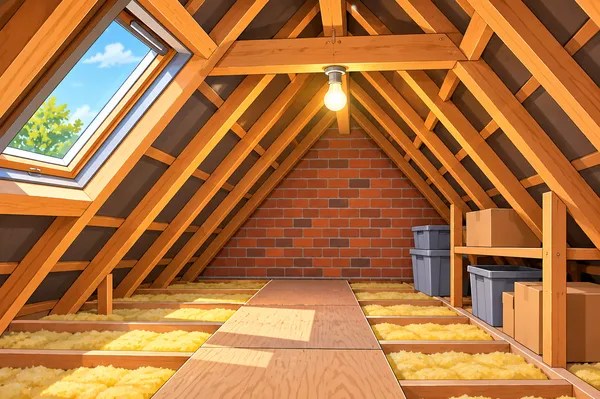
In a Level 2 Home Survey or Level 3 Building Survey, the surveyor examines the roof covering from ground level, adjoining public areas and accessible windows, often using binoculars. Some surveyors use a camera on a pole or a drone where conditions allow. Inside, they inspect the roof space if there is safe access, looking at the timbers, underlay, insulation, ventilation and any signs of leaks.
A Level 3 survey usually involves a more detailed inspection of the roof space and a fuller explanation of the roof structure. For older or more complex roofs, that extra detail is often worth having. See Level 2 vs Level 3 for help choosing.
What are the most common roof problems?
Slipped, cracked or missing slates and tiles
The most common finding. Individual slipped or broken slates and tiles let water reach the underlay or roof timbers. Isolated repairs are cheap for a roofer, though scaffolding or access equipment can add to the cost.
Nail sickness on slate roofs
On older slate roofs, the iron nails holding the slates corrode over time. When many slates start slipping across a roof slope, the cause is often nail sickness. Patch repairs then become a losing battle, and the long-term fix is to strip the roof, replace battens and underlay, and re-lay the slates (reusing sound ones where possible) with new fixings.
Ridge, hip and verge mortar
Mortar bedding to ridge and hip tiles and along verges cracks and loosens with age and weather. Loose ridge tiles can be blown off in high winds. Rebedding or fitting a dry ridge or dry verge system is a common repair.
Chimneys and flashings
Chimney stacks are exposed and often neglected. Surveyors regularly flag:
- Leaning or cracked stacks.
- Eroded mortar joints and spalled bricks.
- Cracked or missing flaunching (the mortar around the pots).
- Worn or poorly fitted lead flashings where the stack meets the roof.
Defective flashings are a common cause of damp around chimney breasts. Our guide to damp in a survey covers how penetrating damp shows up inside.
Valley and parapet gutters
Valleys, where two roof slopes meet, and hidden parapet gutters carry a lot of water. If the lining is split or the gutter is blocked, water gets straight into the building. These are common problem areas on period terraces.
Flat roofs
Traditional felt flat roofs over extensions, dormers and garages often have a limited life, typically 10 to 20 years depending on quality and maintenance. Surveyors look for ponding water, blistering, splits and poor detailing at edges and upstands. Modern single-ply membranes, GRP (fibreglass) and EPDM rubber roofs can last longer if properly installed. If you are buying a house with an extension, see our extension and loft conversion survey guide.
What problems do surveyors find in the loft?
The roof space often tells the surveyor more than the outside.
- Missing or damaged underlay. Many older roofs have no underlay at all, which is not necessarily a defect but makes the roof less tolerant of slipped slates.
- Leaks and staining on timbers, often around chimneys, valleys and roof windows.
- Condensation. Poor ventilation, particularly where insulation has been packed tight to the eaves, can cause condensation, mould and eventually timber decay.
- Woodworm and decay in rafters, purlins and wall plates.
- Removed or altered timbers, for example where struts have been cut out to make storage space.
- Spray foam insulation, which can prevent inspection of the timbers and cause lending problems. See our guide to spray foam and cavity wall insulation.
Why do some roofs sag or spread?
Sagging rafters, a dipping ridge or walls pushed outwards at the top can have several causes:
- Heavier replacement covering. Many older houses originally roofed in slate were later re-covered with heavier concrete tiles without the structure being strengthened.
- Undersized or decayed timbers.
- Roof spread, where the rafters push the tops of the walls outwards because the roof is not adequately tied.
- Removed internal supports.
Slight undulation is common in older roofs and often long standing. Pronounced or recent movement needs investigating by a roofer or structural engineer.
Is asbestos ever found on roofs?
Yes. Corrugated asbestos cement sheets are common on older garages and outbuildings, and some artificial slates and soffit boards from before 2000 contain asbestos. Asbestos cement in good condition is generally low risk if left alone, but it needs specialist handling if removed. See our guide to asbestos in older homes.
What should you do if roof problems are found?
- Check the condition rating. Condition rating 2 items are usually maintenance. Condition rating 3 needs urgent attention or investigation.
- Ask the surveyor whether they think the roof needs repair or replacement.
- Get a reputable roofer to inspect and quote before exchange.
- Use the quote to renegotiate if the work is significant and not reflected in the price.
If you want a local surveyor to look at a roof before you commit, get a fixed-price survey booked and we will arrange access with the estate agent.
Get your survey booked, not quoted
Fixed price up front. We find a local RICS or RPSA surveyor, arrange access with the agent and confirm the date.
See your priceFrequently asked questions
Does a surveyor go on the roof?
Usually not. Surveyors inspect the roof from ground level, often with binoculars, from accessible windows and from inside the loft where safe access is available. Some use a camera pole or drone, but you should not assume close inspection of every slope.
How long does a roof last?
It depends on the covering. Natural slate and clay tiles can last many decades if maintained, concrete tiles typically last several decades, and traditional felt flat roofs often need replacing after 10 to 20 years. Fixings and underlay often fail before the tiles themselves.
What is nail sickness?
Nail sickness is when the nails holding slates in place corrode and fail, so slates slip or fall. It is common on older slate roofs and usually means the roof needs stripping and re-laying with new fixings rather than piecemeal repairs.
Is a sagging roof a serious problem?
Sometimes. Slight undulation is common on older roofs and may be long standing. Pronounced sagging can point to undersized or decayed timbers, or a heavy replacement covering, and is worth investigating with a roofer or structural engineer.
Should I get a roofer to check after my survey?
If the surveyor rates the roof as condition rating 3, or recommends further investigation, get a reputable roofer to inspect and quote before exchange. That gives you real figures to use in any renegotiation.
Related guides
Asbestos in older homes: what a survey report means
Asbestos mentioned in your survey? Where it is found in UK homes built before 2000, what the surveyor's comments mean and when to get it tested.
Defects and problemsBuying in a former coal mining area: surveys and searches
Buying a home on the old coalfield? What a CON29M coal mining search shows, what a survey adds and what to do if a mine shaft is nearby.
Defects and problemsCracks in walls: which ones a surveyor worries about
Which cracks in walls are cosmetic and which a surveyor worries about. Crack widths, patterns and when to call a structural engineer.