Homes in Clay Cross
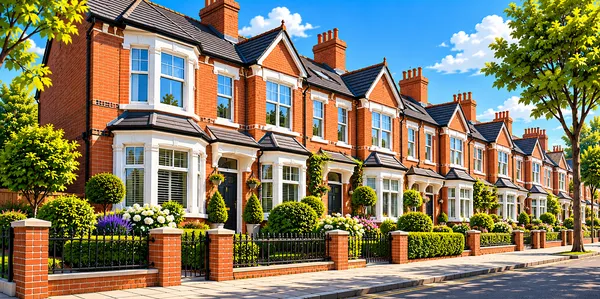
Clay Cross was transformed in the nineteenth century when George Stephenson's company sank collieries and built ironworks here. Rows of terraced colliery housing were built for workers, and Victorian red-brick terraces still make up much of the older stock in the town and in Danesmoor and Tupton.
After the industry closed, Clay Cross saw significant regeneration, with large new-build estates on the former works sites and post-war council housing on the edges of town. The area sits squarely on the coal measures, with a long history of shallow and deep coal mining. As a result, survey reports frequently consider historic subsidence, ground conditions on reclaimed land and the condition of century-old terraces. Regeneration has brought a younger mix of buyers to the town.
Areas we cover include Danesmoor, Holmewood, Pilsley, Tupton, Stretton.
What surveyors look out for in Clay Cross
- Coal mining legacy - always order a coal mining search
- New-builds on former ironworks and colliery sites - ask about remediation
- Older terraces with movement, damp and ageing roofs
- Post-war homes of non-traditional construction
Which survey for a Clay Cross home?
A Level 3 Building Survey is advisable for Clay Cross's pre-war terraces, and a Level 2 Home Survey is suitable for most of the newer estate homes.
| Survey | Best for | From |
|---|---|---|
| Level 2 Home Survey | Most conventional homes | £395 |
| Level 2 Home Survey + valuation | Adds market value and rebuild cost | £495 |
| Level 3 Building Survey | Older, altered or unusual homes | £595 |
| RICS valuation only | Price check, probate, family matters | £295 |
Compare them in Level 2 vs Level 3.
Survey prices in Clay Cross by property value
| Property value | Level 2 | Level 2 + valuation | Level 3 | valuation only |
|---|---|---|---|---|
| Up to £100k | £395 | £495 | £595 | £295 |
| £100k - £150k | £425 | £525 | £650 | £310 |
| £150k - £200k | £450 | £560 | £695 | £325 |
| £200k - £250k | £475 | £595 | £750 | £345 |
| £250k - £300k | £525 | £650 | £825 | £375 |
| £300k - £400k | £575 | £715 | £895 | £395 |
| £400k - £500k | £650 | £795 | £995 | £450 |
| £500k - £750k | £775 | £950 | £1,195 | £525 |
| £750k - £1m | £925 | £1,125 | £1,450 | £625 |
| £1m - £1.5m | £1,150 | £1,395 | £1,795 | £795 |
| Over £1.5m | On request | On request | On request | On request |
Fixed prices including VAT. Some large or unusual properties may be priced individually - we confirm your price before you pay.
How booking works
- Tell us the property
Two minutes online. You see a fixed price before you send anything.
- We secure a surveyor
We check local RICS and RPSA surveyors' diaries and lock in the earliest slot.
- One call to confirm
We take the estate agent's details and your payment, then arrange access.
- Report delivered
Your surveyor inspects and sends the report, usually within a few working days.
House surveys in Clay Cross: FAQs
How much does a house survey cost in Clay Cross?
Our fixed prices in Clay Cross start from £395 for a Level 2 Home Survey, £495 with a valuation and £595 for a Level 3 Building Survey. The exact price depends on the property's value, and you see it before you book.
Which areas around Clay Cross do you cover?
We book surveyors across Clay Cross, including postcode districts S45, and nearby towns such as Chesterfield, Alfreton, Matlock, Bolsover.
Which survey should I get for a home in Clay Cross?
A Level 3 Building Survey is advisable for Clay Cross's pre-war terraces, and a Level 2 Home Survey is suitable for most of the newer estate homes.
How quickly can a surveyor visit a property in Clay Cross?
We aim to confirm a local surveyor within one working day of your request and book the earliest slot the estate agent can offer. Inspections often happen within a week, depending on access.
Guides for Clay Cross buyers
Buying in a former coal mining area: surveys and searches
Buying a home on the old coalfield? What a CON29M coal mining search shows, what a survey adds and what to do if a mine shaft is nearby.
Defects and problemsSubsidence: what a survey can (and can't) tell you
What a surveyor can tell you about subsidence, what they can't, and the steps to take if movement is flagged in your house survey.
Choosing a surveySurveys for Victorian and period homes
Which survey to get on a Victorian, Edwardian or Georgian home, the defects surveyors commonly find, and how to plan for repairs.
Defects and problemsDamp in a survey report: rising, penetrating and condensation
Damp flagged in your survey? How surveyors tell rising damp, penetrating damp and condensation apart, and what to do before you exchange.