A RICS Level 3 Building Survey is the most detailed home survey available in the UK. It is a thorough inspection of a property's visible and accessible fabric, with a report that explains the defects found, their likely causes, how to put them right and how urgent each one is. It suits older, larger, unusual, altered or run-down homes, and anyone planning major works.
Key points
- Level 3 is the top tier of the RICS Home Survey Standard, previously known as a full structural survey or building survey.
- It goes further than a Level 2, with more time on site and much more explanation in the report.
- It is the usual choice for period, listed, non-standard or substantially altered homes.
- It typically costs around £600-£1,500+, depending on the property.
What does a Level 3 Building Survey include?
The surveyor inspects all the parts of the property they can safely see and access, inside and out, in more depth than a Level 2. Typically that means:
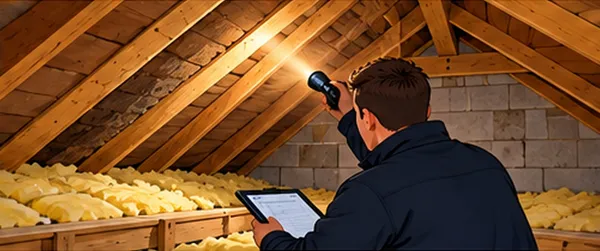
- Roof and roof space: coverings, chimneys, flashings, valleys, and the timber structure and insulation inside the loft.
- Walls and structure: signs of movement, cracking, bulging, wall ties, lintels, damp-proofing and ventilation.
- Floors: where practical, looking at sub-floor voids through accessible hatches, and checking for springiness, rot or infestation.
- Joinery and finishes: windows, doors, staircases, ceilings and internal walls.
- Services: a visual inspection of electrics, gas, water, heating and drainage. These are not tested to specialist standard.
- Outside: outbuildings, boundary walls, retaining walls, trees near the building and drainage where visible.
The surveyor may use a moisture meter, binoculars, a torch and sometimes a camera pole or drone. They will not cause damage, so they will not cut into walls or lift fixed floorboards without the owner's permission.
What does the Level 3 report tell you?
Like the Level 2, the report uses condition ratings 1, 2 and 3 (and NI for not inspected). What sets it apart is the depth of explanation. For each significant defect, you can usually expect:
- A description of the problem and where it is.
- The surveyor's view on the likely cause.
- The repairs that are likely to be needed and how urgent they are.
- What could happen if the issue is left.
- Recommendations for specialist investigation where needed.
Many surveyors also include an indication of repair costs or the type of contractor required, though cost estimates are not a requirement of every Level 3 report. Ask when you book if that is important to you.
Who needs a Level 3 survey?
Choose a Level 3 if the property is any of the following:
- Older housing, especially homes built before about 1900. See surveys for Victorian and period homes.
- Listed or in a conservation area. Our guide to buying a listed building explains why.
- Non-standard construction, such as timber frame, thatch, cob, or concrete system-built homes.
- Extended or converted, including loft conversions, knocked-through walls and large rear extensions. See buying a house with an extension or loft conversion.
- In poor condition or showing visible signs of movement, damp or neglect.
- Large or high-value, where small percentages of repair costs become big numbers.
- A renovation project, where you need a clear picture of the fabric before planning works.
If the home is modern, conventional and in good condition, a Level 2 Home Survey is often enough. Our Level 2 vs Level 3 guide sets out the decision.
What does a Level 3 survey not cover?
Even the most detailed home survey has limits:
- It is a visual inspection. Hidden defects behind finishes, under fixed floors or inside walls cannot be seen.
- Services are not formally tested. Expect recommendations for an electrician's condition report, a gas safety check or a drainage survey where appropriate.
- It is not a structural engineer's calculation or design. If serious movement is suspected, you may be referred to an engineer.
- Legal matters, such as planning permission, listed building consent and boundaries, are for your conveyancer, though the surveyor will flag things to check.
- It does not include a valuation unless you add one.
How much does a Level 3 Building Survey cost?
Typical fees run from around £600 to £1,500, with large country houses, listed buildings or complex properties often costing more. Factors include:
- Property size and number of rooms.
- Value and complexity.
- Age and construction type.
- Location.
- Whether you add a valuation.
Compared with the cost of a new roof, underpinning or treating widespread damp, the difference between a Level 2 and Level 3 is usually small. Our guide to house survey costs gives more detail.
How long does it take?
Expect the surveyor to spend several hours on site, often most of a day for a larger or older home. The written report commonly takes a few working days to a week. If your timetable is tight, mention it when booking.
Should you attend the survey?
You do not need to be there, and the surveyor needs uninterrupted time to work. That said, many surveyors are happy to have a short chat at the end of the inspection or a phone call once the report is ready. This is a good chance to ask about priorities and costs. See questions to ask your surveyor.
What to do after a Level 3 report
A Level 3 on an older home will almost always list a number of repairs. That is normal. The key steps are:
- Read the summary and pick out every condition rating 3.
- Commission any further investigations the surveyor recommends before you exchange.
- Get quotes for major repairs if you plan to renegotiate.
- Pass the legal points to your conveyancer.
Book a Level 3 Building Survey
Book A Surveyor finds a local RICS or RPSA regulated independent surveyor, agrees a fixed price up front, arranges access with the estate agent and takes payment, so you have a booked survey rather than a list of quotes. Read more about the Level 3 Building Survey, see how it works, or get a fixed-price survey booked.
Get your survey booked, not quoted
Fixed price up front. We find a local RICS or RPSA surveyor, arrange access with the agent and confirm the date.
See your priceFrequently asked questions
Is a Level 3 Building Survey the same as a full structural survey?
It is the modern equivalent of what people used to call a full structural survey. It is the most detailed survey in the RICS Home Survey Standard, though it is still not a structural engineer's report.
How much does a Level 3 survey cost?
A Level 3 typically costs around £600-£1,500, and more for large, high-value or complex properties. Prices vary with size, value, location and condition.
Does a Level 3 survey include a valuation?
Not as standard. Many surveyors will add a market valuation for an extra fee if you ask when booking.
Will the surveyor go on the roof during a Level 3?
Usually not. The surveyor inspects the roof from the ground, from accessible windows and from inside the roof space, often using binoculars and sometimes a camera pole or drone where they offer it. They will only go where it is safe.
How long does a Level 3 survey take?
The inspection often takes most of a day for a typical older house, and longer for large or complex homes. The report typically follows within about a week.
Related guides
Buy-to-let surveys: what landlords should check before they buy
Buying a rental property? Which survey landlords need, what to look for so the home passes safety and lettings standards, and how it ties in with your buy-to-let mortgage.
Choosing a surveyBuying a flat: which survey and what to check
Which survey to get when buying a flat, what a surveyor can and can't inspect in a block, and the lease and building checks that matter.
Choosing a surveyBuying a house with an extension or loft conversion: survey guide
Buying a home with an extension or loft conversion? Which survey to choose, common defects, and the paperwork your conveyancer should check.