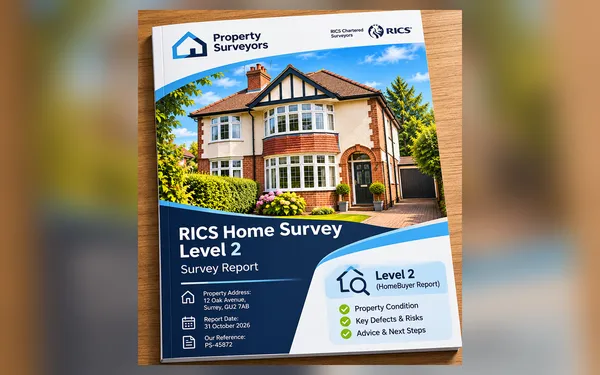
A mortgage valuation is carried out for your lender, to check the property is worth enough to secure the loan. It is not a survey and does not tell you about the condition of the home. A RICS Level 2 or Level 3 survey is commissioned by you, for you, and is the only way to get an independent view on defects and repairs before you commit.
Key points
- The lender's valuation protects the lender's money, not your interests.
- Many valuations are brief, and some are done without a visit at all.
- A home survey looks at condition, defects and risks, and is written for you.
- Most buyers benefit from having both: the lender's valuation plus their own survey.
What is a mortgage valuation?
When you apply for a mortgage, the lender needs to know the property is suitable security. If you stop paying, they want to be confident they can sell it and recover the loan. To find out, they instruct a valuer, often a RICS registered valuer, to give an opinion on value and saleability.
Depending on the lender, the type of loan and the property, the valuation might be:
- A physical inspection, often fairly short, focused on the factors that affect value.
- A drive-by valuation, looking only at the outside.
- A desktop or automated valuation, using sold prices and data with no visit at all.
You will often pay a fee for the valuation, or the lender may include it free as part of the mortgage product. Either way, the valuer's client is the lender.
What a mortgage valuation does not tell you
Because it is for the lender, a mortgage valuation will not usually:
- Inspect the roof space, look for damp or check walls for movement in any detail.
- Rate the condition of each part of the property.
- Tell you what repairs are needed or how urgent they are.
- Highlight issues that do not significantly affect value for the lender, but that would matter to you.
If the valuer does spot something serious, such as subsidence or Japanese knotweed, the lender may hold back part of the loan (a retention) or ask for a specialist report. But the absence of comments is not reassurance. It may just mean the valuer was not looking for it.
What does a home survey do instead?
A home survey is carried out by a regulated surveyor working for you. The RICS Home Survey Standard has three levels:
- Level 1 Condition Report - a basic overview with condition ratings. See is a Level 1 Condition Report worth it?
- Level 2 Home Survey - a mid-level inspection for conventional homes in reasonable condition, available with or without a valuation.
- Level 3 Building Survey - the most detailed survey, for older, larger, unusual or altered homes.
Each uses condition ratings 1, 2 and 3 to show what needs attention, and the surveyor owes their duty of care to you.
Mortgage valuation vs survey: side by side
| Mortgage valuation | Home survey (Level 2 or 3) | |
|---|---|---|
| Who is the client? | The lender | You |
| Purpose | Confirm value and suitability as security | Report on condition, defects and risks |
| Inspection | Short, drive-by or none | Thorough visual inspection, inside and out |
| Condition ratings | No | Yes (1, 2, 3 and NI) |
| Repair advice | Rarely | Yes, more detail at Level 3 |
| Market value | Yes | Optional with Level 2, can be added to Level 3 |
Why the lender's valuation isn't enough
Here is a practical way to think about it. Lenders typically lend a percentage of the property's value, so they have a cushion. If the house needs £15,000 of roof work, the lender may still be comfortable because the loan is covered. You, on the other hand, will need to find that £15,000.
A survey gives you:
- Knowledge before you commit. You find out about problems before exchange, when you can still change your mind.
- Negotiating power. Evidence of repair costs supports a lower offer. See how to renegotiate the price after a bad survey.
- A repair plan. Even if you go ahead, you know what to budget for.
- Peace of mind. You know what you are buying.
What if your lender offers a survey upgrade?
Some lenders and brokers offer to upgrade your mortgage valuation to a Level 2 or Level 3 survey carried out by the same firm. This can be convenient, but it is worth checking:
- The price compared with booking a local surveyor directly.
- That the report is a full RICS Level 2 or Level 3, not a lighter product.
- Whether the surveyor knows the local area and its housing stock.
You are free to choose your own surveyor. Our guide to choosing a local surveyor covers what to look for.
What about valuation as part of a survey?
If you want your own independent view of value, you can add a valuation to a Level 2 survey. This is particularly useful for cash buyers, people worried about overpaying, or buyers who want evidence to support a price renegotiation. See Level 2 survey with valuation and our valuation page.
When should you book the survey?
Book your survey soon after your offer is accepted, usually around the same time your lender instructs its valuation. If the lender's figure comes in below the price, see what to do about a down valuation, and talk to a broker such as Option Finance about whether another lender would see it differently. That way the findings arrive while your conveyancer is still doing searches and before you exchange contracts. Our guide to when to book a house survey goes into timing.
Get your own survey booked
Your lender's valuation answers the lender's question. A survey answers yours. Book A Surveyor finds a local RICS or RPSA regulated surveyor, agrees a fixed price, arranges access with the estate agent and takes payment, so you get a booked survey without chasing quotes. See how it works or get a fixed-price survey booked.
Get your survey booked, not quoted
Fixed price up front. We find a local RICS or RPSA surveyor, arrange access with the agent and confirm the date.
See your priceFrequently asked questions
Can I see my mortgage valuation report?
Often yes, but it depends on the lender. Many share a copy or a summary, though it is written for the lender and usually contains little detail about condition.
Can I rely on a mortgage valuation instead of a survey?
Not safely. The valuation is for the lender and may not involve a detailed inspection at all. It will not give you a condition report on the property.
What is a desktop or automated valuation?
It is a valuation done without anyone visiting the property, using sold prices and data. Lenders often use them for lower-risk loans, which means nobody may physically inspect the home before you buy.
What happens if the mortgage valuation comes in low?
The lender may offer less than you asked for, a situation known as a down valuation. You may need to renegotiate the price, increase your deposit or look at other lenders.
Do cash buyers need a valuation?
There is no lender valuation for cash purchases, so cash buyers have no independent check of value unless they arrange one. Adding a valuation to a Level 2 survey is a common way to cover this.
Related guides
Buy-to-let surveys: what landlords should check before they buy
Buying a rental property? Which survey landlords need, what to look for so the home passes safety and lettings standards, and how it ties in with your buy-to-let mortgage.
Choosing a surveyBuying a flat: which survey and what to check
Which survey to get when buying a flat, what a surveyor can and can't inspect in a block, and the lease and building checks that matter.
Choosing a surveyBuying a house with an extension or loft conversion: survey guide
Buying a home with an extension or loft conversion? Which survey to choose, common defects, and the paperwork your conveyancer should check.